
AI Summary
- ATO treats crypto as a CGT asset (property), meaning capital gains tax applies when you sell, trade, or spend it
- Crypto held for more than 12 months qualifies for a 50% CGT discount on the gain
- Gains are taxed at your marginal income tax rate, not a flat rate
- The report includes capital gains, derivatives income, staking and airdrop income, and portfolio balances
- Ready to share with your registered tax agent or use directly for your Australian tax return
What Is in This Report?
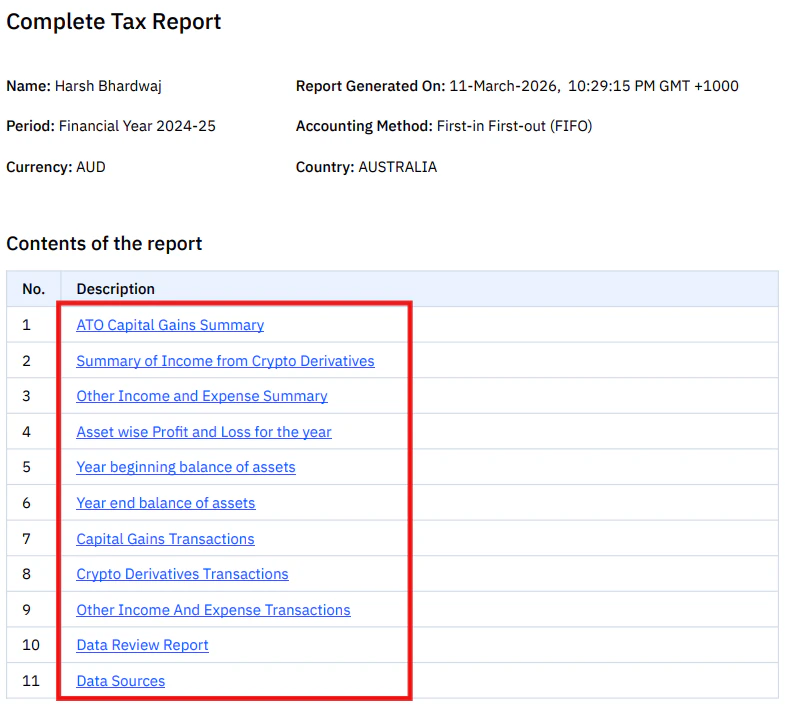
How the ATO Treats Crypto
The ATO treats cryptocurrency as property, meaning it is subject to Capital Gains Tax (CGT).
Crypto gains are taxed at your marginal income tax rate.
ATO Capital Gains Summary
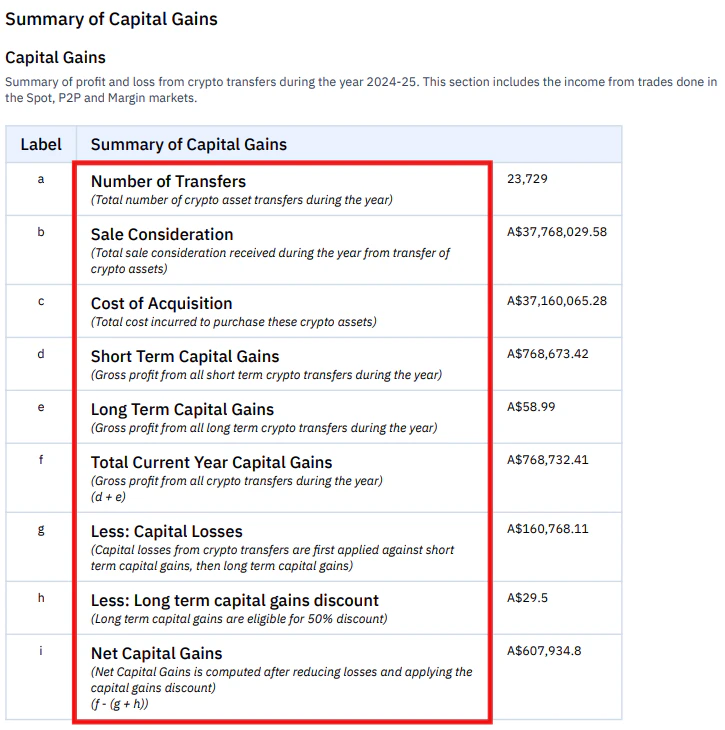
Long-term gains are eligible for the 50% CGT discount.
The 12-Month CGT Discount
Australian tax law allows a 50% discount on capital gains if the asset was held for more than 12 months.
Example:
You buy BTC for A$40,000 and sell it after 14 months for A$60,000. Capital Gain: A$60,000 − A$40,000 = A$20,000 Since the asset was held for more than 12 months, the 50% Capital Gains Tax (CGT) discount may apply (for eligible taxpayers). Taxable Capital Gain after 50% discount: A$20,000 × 50% = A$10,000 So, the amount added to your taxable income would be A$10,000. KoinX automatically identifies which trades qualify for the CGT discount.
Summary of Income from Crypto Derivatives
If you trade crypto derivatives (futures or options), the report summarises your trading results.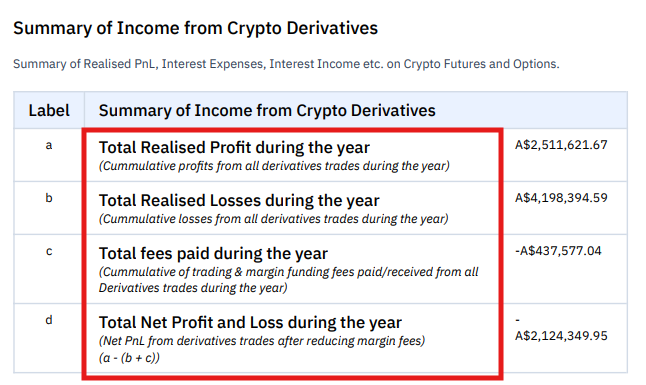
ATO guidance on crypto derivatives taxation is still evolving. Professional advice may be recommended for complex derivatives activity.
Other Income & Expense Summary
This section records crypto received as income.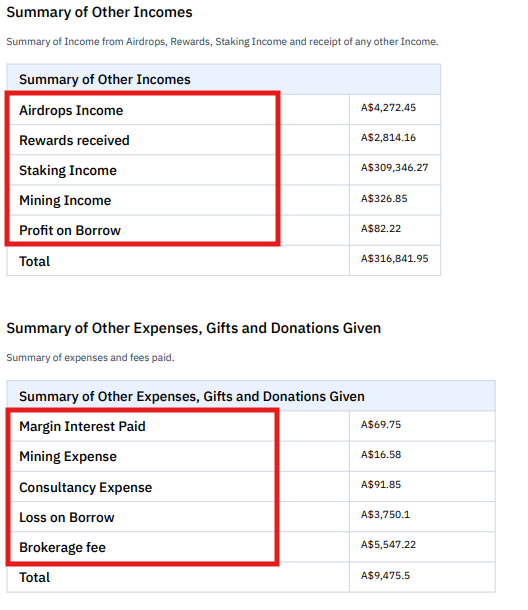
Examples include:
- Airdrops
- Staking rewards
- Mining income
- Salary paid in crypto
- Consultancy income
- Margin interest
- Mining costs
- Donations
- Consultancy expenses
- Brokerage fees
Beginning and End of Year Asset Balances
The report includes portfolio snapshots showing your crypto holdings at the start and end of the tax year.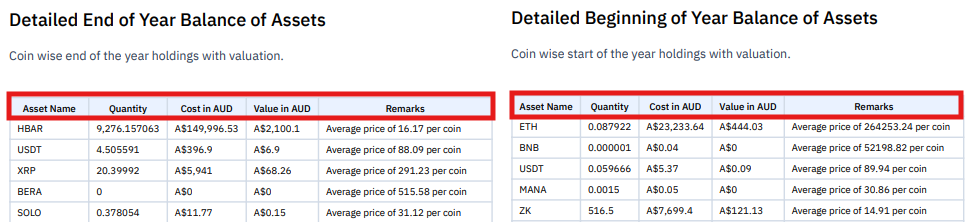
Why this matters:
- Shows your starting position for the year
- Helps verify that cost basis carry-forward is correct
- Useful for audit trail and reconciliation
Capital Gains Transactions
This section provides a detailed record of each taxable crypto disposal.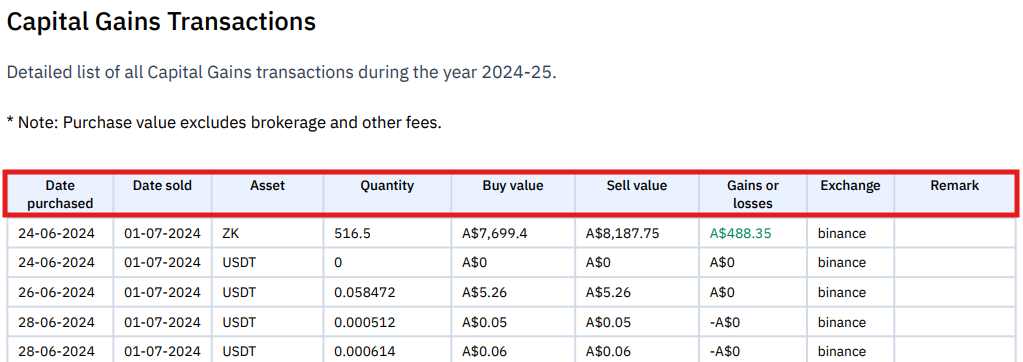
This acts as the audit trail supporting your capital gains summary.
Crypto Derivatives Transactions
This section lists all futures and options trades during the year.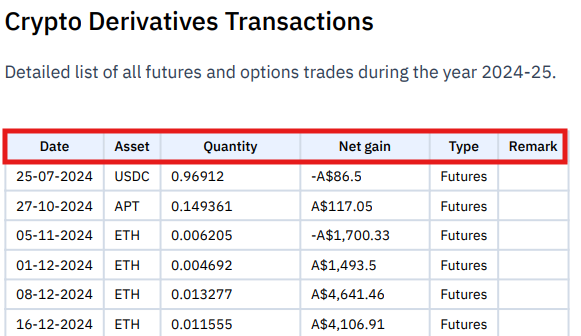
These transactions support the derivatives summary earlier in the report.
Other Income Transactions
This section lists detailed records of income and expense events such as: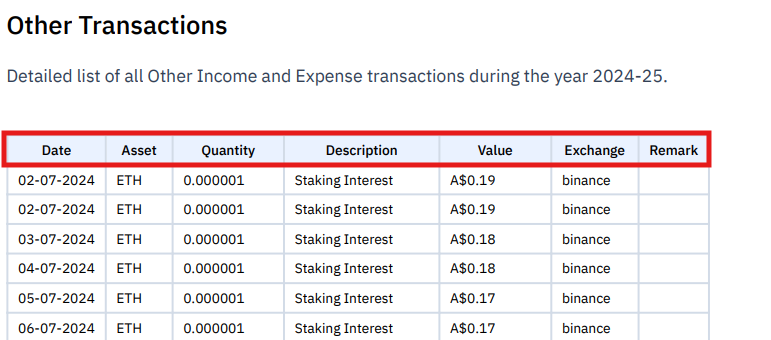
- Reward income
- Staking interest
- Airdrops
- Mining income
- Salary payments
- Consultancy income
- Donations
- Mining expenses
Asset Wise Profit & Loss
This section summarises profit and loss by cryptocurrency asset.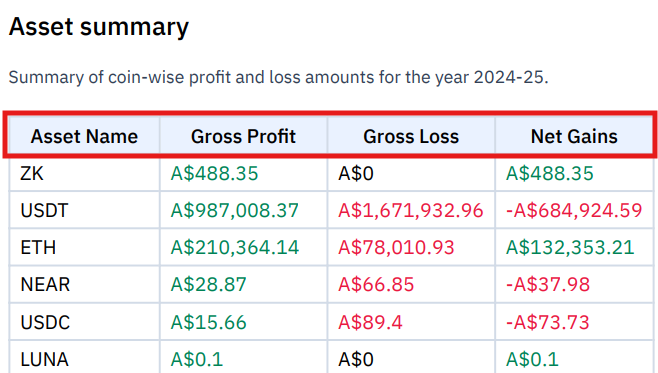
This helps identify which assets generated the most gains or losses.
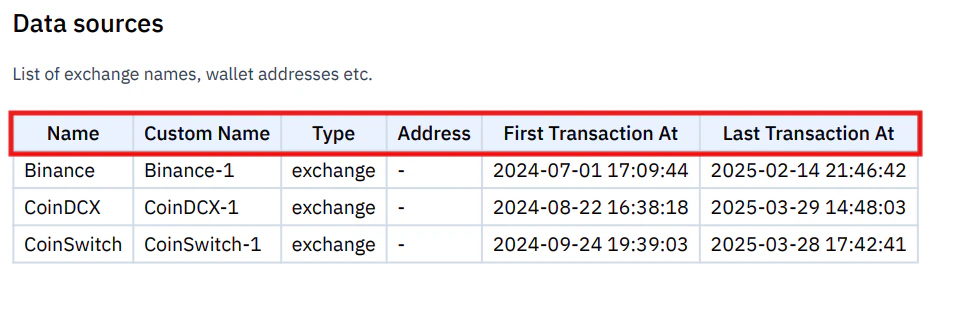
Data Sources
Personal Use Asset Exemption
Crypto may be exempt from CGT if it was used to purchase personal goods or services, the original acquisition cost was under A$10,000, and the crypto was not held as an investment. The ATO carefully reviews personal use claims.Frequently Asked Questions
Which KoinX reports do Australian users need?
Which KoinX reports do Australian users need?
The Complete Tax Report (Australia) provides a full overview of gains, income, and balances for your tax return.
Does the ATO treat crypto as property?
Does the ATO treat crypto as property?
Yes. Cryptocurrency is treated as a CGT asset, meaning capital gains tax applies when you dispose of it.
How does KoinX apply the 50% CGT discount?
How does KoinX apply the 50% CGT discount?
KoinX automatically identifies disposals where the asset was held for more than 12 months and applies the 50% discount.
Does the report comply with ATO guidelines?
Does the report comply with ATO guidelines?
Yes. The report follows ATO guidance on CGT calculation, cost basis methods, and income events.
What about the personal use exemption?
What about the personal use exemption?
Crypto used for personal purchases under A$10,000 may qualify for exemption, but the ATO scrutinises these claims carefully.