
AI Summary
- Japan taxes crypto as miscellaneous income (Zatsushotoku), with progressive rates up to approximately 55% including local taxes
- Every crypto transaction is taxable, including crypto-to-crypto swaps and using crypto for purchases
- Cost basis is calculated using either the Moving Average Method or Total Average Method
- The report covers crypto trading gains, derivatives income, staking and DeFi income, and portfolio balances
- Can be shared with your Zeirishi (tax accountant) for Kakuteishinkoku filing
What Is in This Report?
The Japan Complete Tax Report contains the following sections: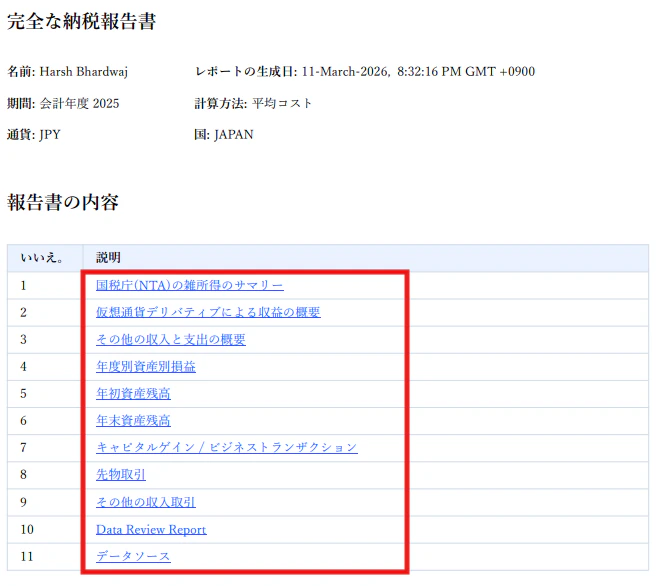
How Japan Taxes Crypto
Japan treats cryptocurrency gains as miscellaneous income rather than capital gains.
Crypto income is combined with other miscellaneous income categories when calculating your final tax liability.
Miscellaneous Income Summary
The report includes a summary of taxable crypto income generated during the year.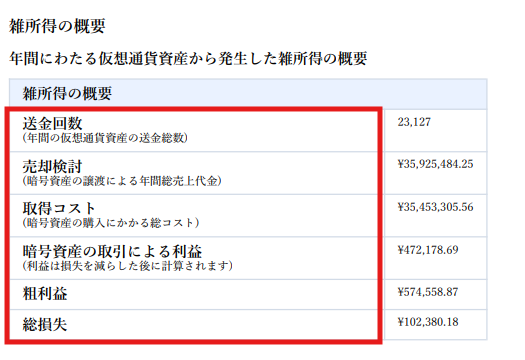
This summary provides the total amount that must be reported in your Kakuteishinkoku.
Every Trade Is Taxable
Under Japanese tax rules, almost every crypto transaction triggers taxation:
This means even crypto-to-crypto swaps create taxable gains or losses.
Cost Basis Methods in Japan
The NTA allows two calculation methods:
Once selected, the same method must be used consistently across tax years.
Summary of Income from Crypto Derivatives
If you trade derivatives, the report includes a summary of futures and options trading results.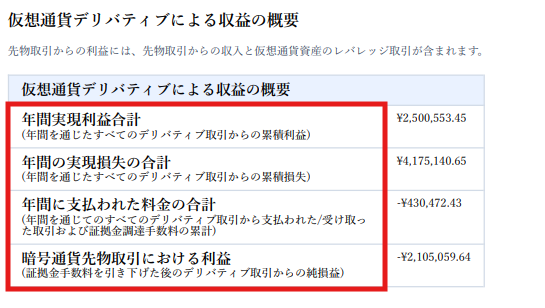
This section helps calculate derivatives income as miscellaneous income.
Other Income & Expense Summary
This section includes crypto received as income rather than through trading. Examples include:- Airdrops
- Staking rewards
- Mining income
- Salary paid in crypto
- Consultancy income
- Margin fees
- Mining expenses
- Donations
- Consultancy expenses
- Miscellaneous costs
Detailed Beginning of Year Balance of Assets
Shows the portfolio position at the start of the financial year. Each entry includes: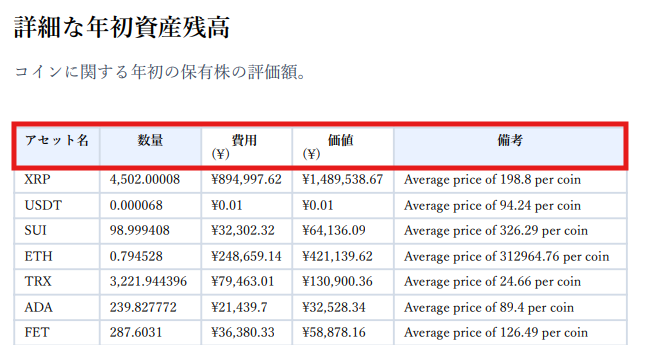
Detailed End of Year Balance of Assets
Shows the portfolio position on the last day of the financial year.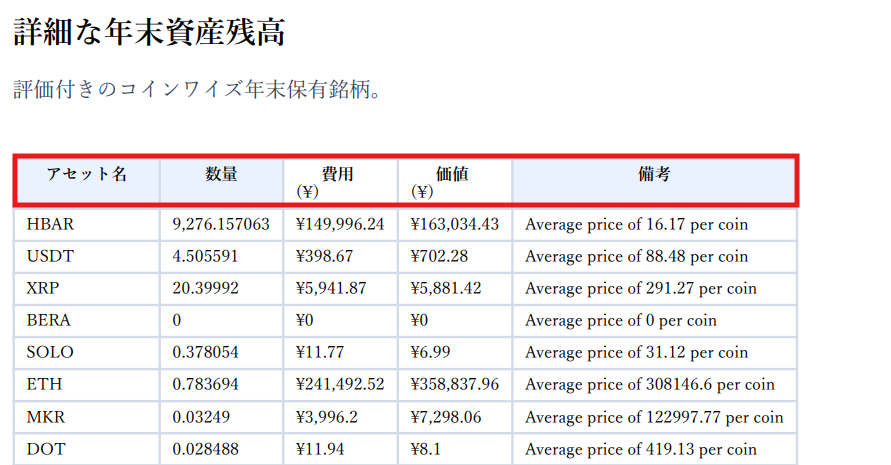
- Shows your starting position for the year
- Helps verify that cost basis carry-forward is correct
- Useful for audit trail and reconciliation
Capital Gains Transactions
This section lists all crypto disposals that generated gains or losses.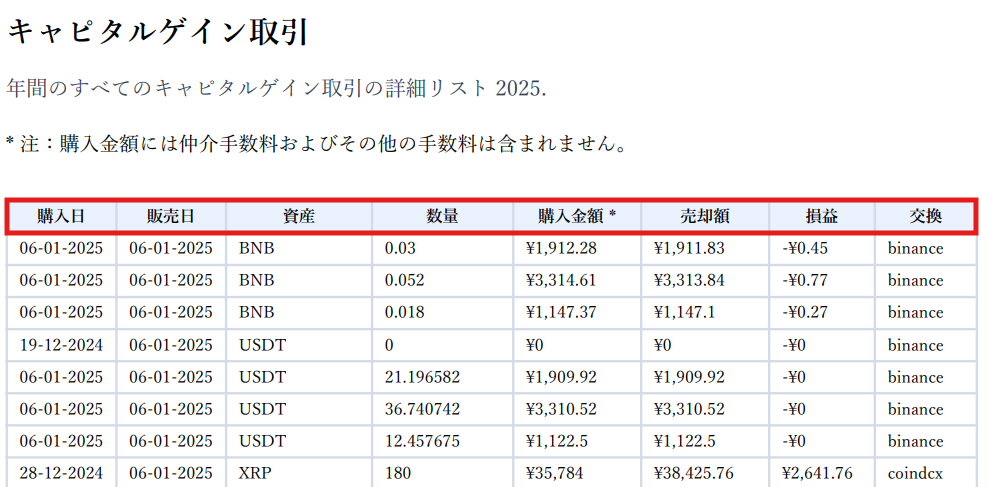
This section serves as the audit trail for tax calculations.
Crypto Derivatives Transactions
This section provides a detailed list of futures and options trades.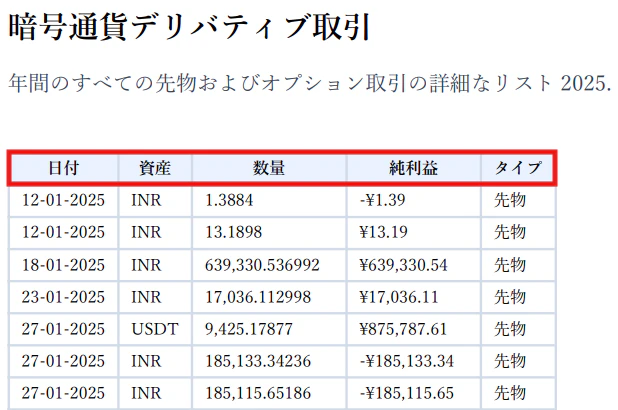
These transactions support the derivatives summary earlier in the report.
Other Income Transactions
This section lists detailed income and expense events such as: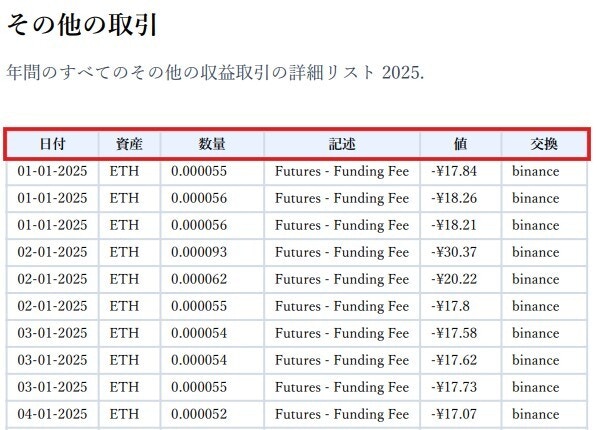
- Reward income
- Staking interest
- Airdrops
- Mining income
- Salary payments
- Consultancy income
- Donations
- Mining expenses
Asset Wise Profit & Loss
This section summarises profit and loss for each cryptocurrency asset.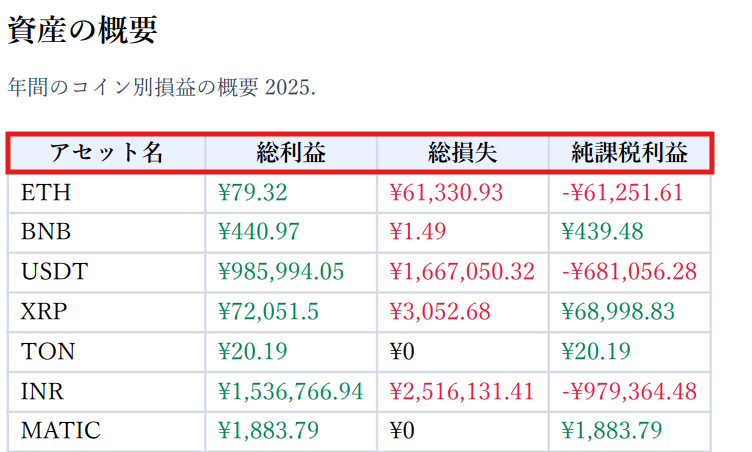
This helps identify which assets contributed most to your gains or losses.
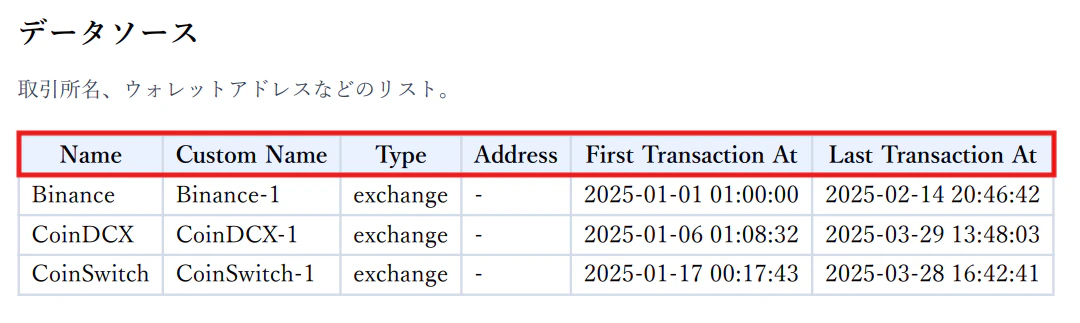
Data Sources
DeFi and Staking Under Japanese Rules
All crypto income is treated as miscellaneous income.
These values become the cost basis for future disposals.
Filing Your Kakuteishinkoku
Japan’s tax year runs from January 1 to December 31. The filing deadline is typically March 15 of the following year. To file: calculate total crypto miscellaneous income using the KoinX report, combine it with other miscellaneous income, file via e-Tax or paper return, then pay any taxes owed. If you work with a Zeirishi (tax accountant), share the KoinX report with them.Frequently Asked Questions
Which KoinX reports do Japan users need?
Which KoinX reports do Japan users need?
The Complete Tax Report (Japan) is your main document. It calculates gains and income according to NTA guidelines.
Does the KoinX Japan report follow NTA rules?
Does the KoinX Japan report follow NTA rules?
Yes. It uses NTA-accepted cost basis methods and treats crypto gains as miscellaneous income.
Is the report available in Japanese?
Is the report available in Japanese?
The report is primarily in English but follows NTA calculation rules and displays values in JPY.
How does KoinX handle DeFi and staking income?
How does KoinX handle DeFi and staking income?
Staking rewards, DeFi yield, and airdrops are recorded as miscellaneous income at fair market value when received.
Why are Japan crypto taxes so high?
Why are Japan crypto taxes so high?
Japan taxes crypto as miscellaneous income instead of capital gains, meaning it is taxed at progressive income tax rates up to approximately 55%.