
AI Summary
- CRA treats crypto as a commodity, and only 50% of your capital gains are taxable
- Cost basis is calculated using the Adjusted Cost Base (ACB) method, which averages your purchase price across all holdings of an asset
- Every crypto-to-crypto trade is a taxable disposition under CRA rules
- The report includes capital gains, derivatives income, crypto income, and portfolio balances
- Ready to share with your accountant or tax professional for T1 filing
What Is in This Report?
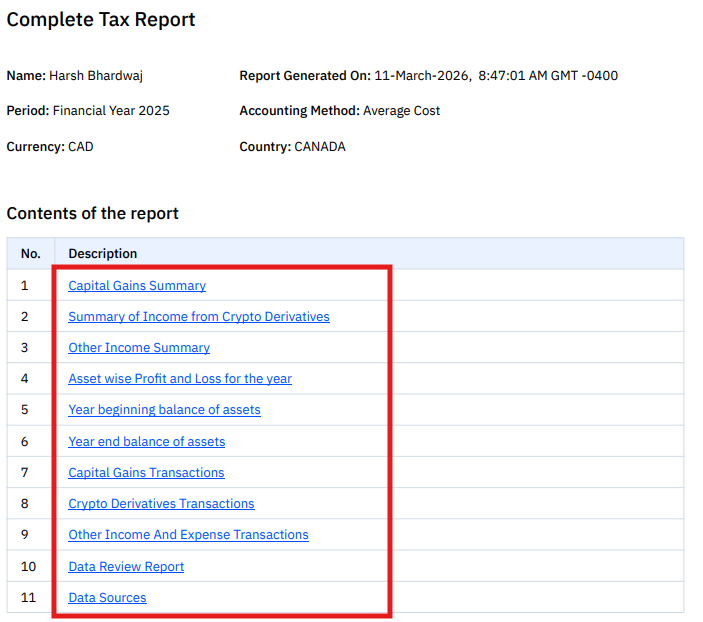
How CRA Taxes Crypto
The 50% Inclusion Rate
Canada taxes only half of your capital gains.
Example:
You buy BTC for CAD 40,000 and later sell it for CAD 60,000.
- Capital Gain: CAD 60,000 − CAD 40,000 = CAD 20,000
- Taxable Capital Gain:
CAD 20,000 × 50% = CAD 10,000
- Tax Owed:
CAD 10,000 × 30% = CAD 3,000
KoinX reports the full capital gain, which you then use to calculate the taxable portion under CRA rules.
Crypto-to-Crypto Trades Are Taxable
In Canada, every crypto-to-crypto trade is considered a disposition. Examples: BTC to ETH trade, token swap on a DEX, buying an NFT with crypto. The fair market value at the time of the trade determines the proceeds.Adjusted Cost Base (ACB)
Canada requires the Adjusted Cost Base method. Steps: track total cost of all purchases of an asset, track total quantity held, calculate average cost per unit, then use that average cost when selling. Example:You buy 1 BTC for CAD 30,000, and later buy another 1 BTC for CAD 40,000.
- Total Cost: CAD 30,000 + CAD 40,000 = CAD 70,000
- Total BTC Held: 2 BTC
- ACB per BTC: CAD 70,000 ÷ 2 = CAD 35,000
- Capital Gain: CAD 50,000 − CAD 35,000 = CAD 15,000
KoinX automatically calculates ACB for each asset.
Capital Gains Summary
This section summarises all crypto disposals during the tax year.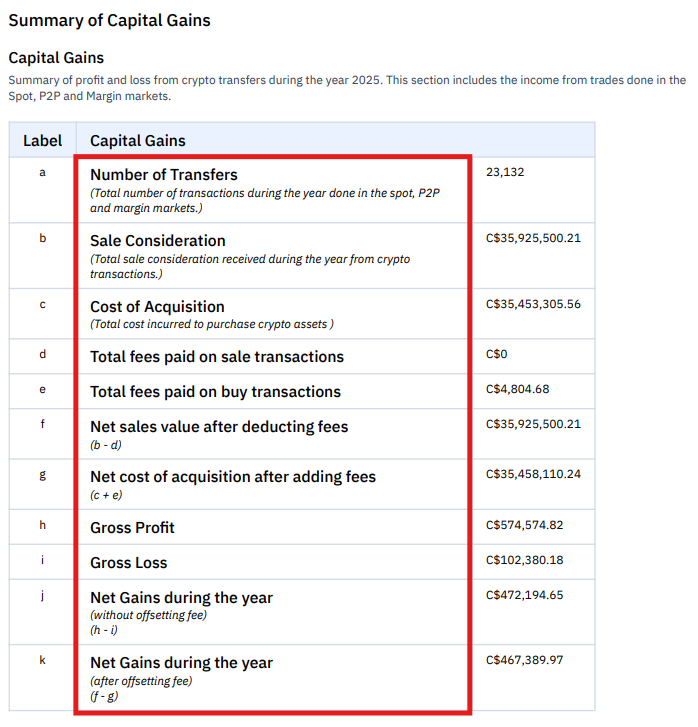
Values are calculated using the Average Cost / ACB method.
Summary of Income from Crypto Derivatives
If you traded crypto derivatives such as futures or options, this section summarises your realised trading results.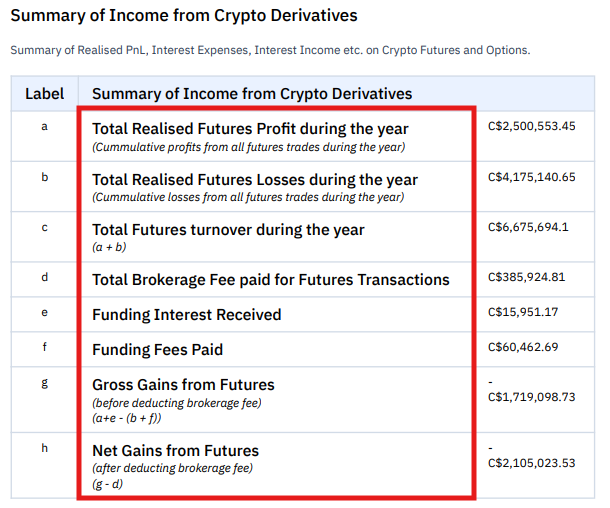
Options trading is also summarised in this section.
Other Income and Expense Summary
This section captures crypto received as income.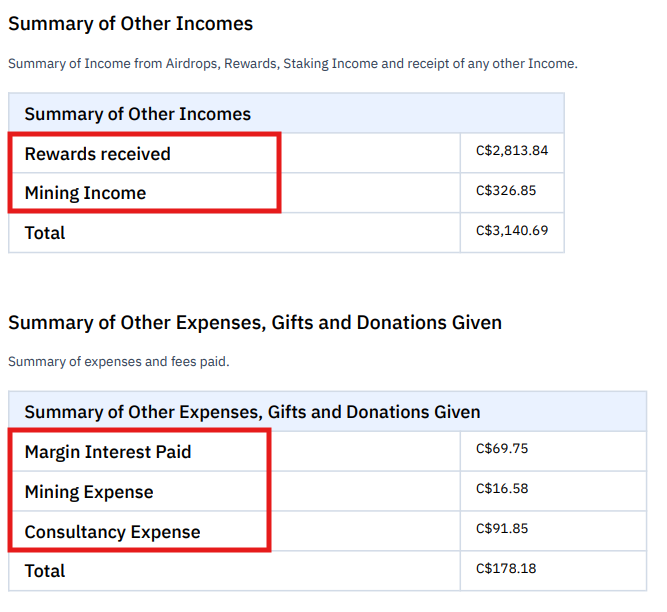
- Airdrops
- Rewards
- Staking income
- Salary in crypto
- Consultancy income
- Mining income
- Margin interest
- Mining expenses
- Donations
- Consultancy expenses
Detailed Beginning of Year Asset Balances
The report includes portfolio snapshots showing your crypto holdings at the start and end of the tax year.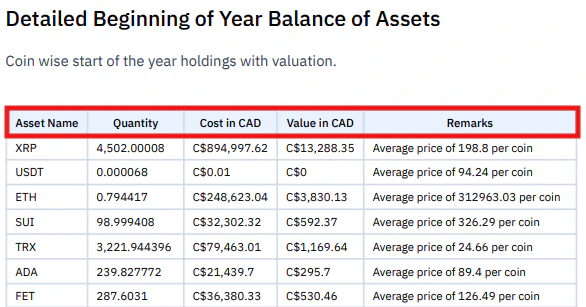
Detailed End of Year Assets Balances
Shows the portfolio position on the last day of the financial year.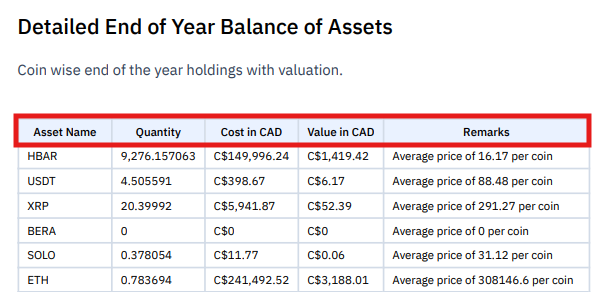
- Shows your starting position for the year
- Helps verify that cost basis carry-forward is correct
- Useful for audit trail and reconciliation
Capital Gains Transactions
This section lists every taxable crypto disposal.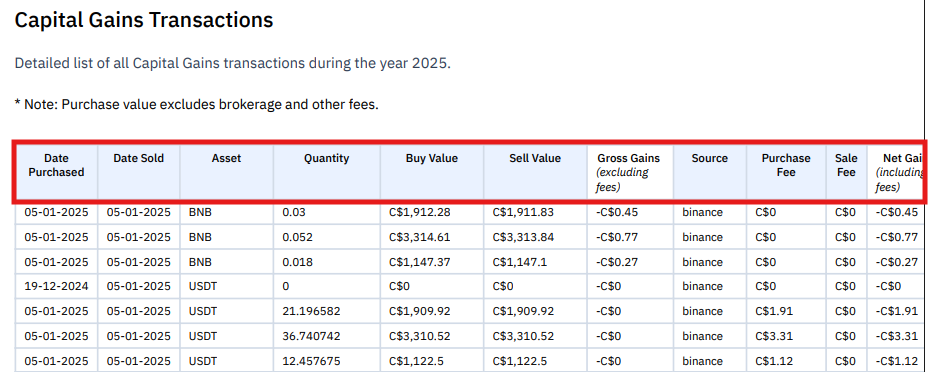
This provides the audit trail supporting your capital gains summary.
Crypto Derivatives Transactions
Lists individual futures and options trades.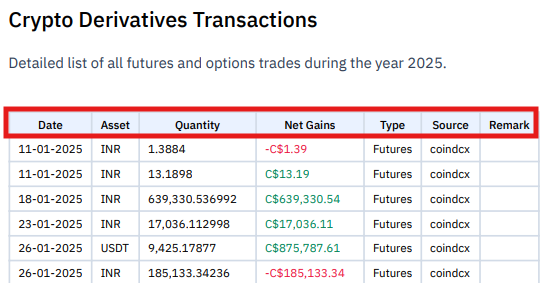
Other Income and Expense Transactions
This section lists detailed income events such as:- Reward income
- Staking interest
- Airdrops
- Salary payments
- Mining income
- Donations
- Expenses
.png?fit=max&auto=format&n=vPPhh49QVJ9d-GP6&q=85&s=11e8afddd6fcb5a66313ed51c7190b5b "Screenshot2026 03 12142525(1)")
Asset Wise Profit & Loss
This section summarises profit and loss per cryptocurrency.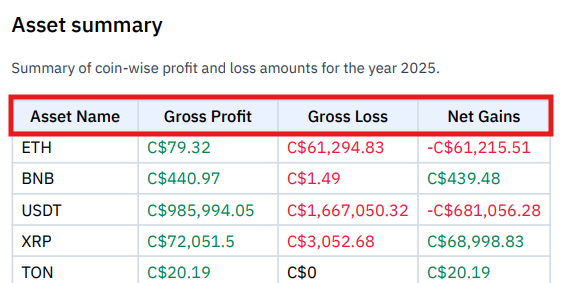
This helps identify which assets generated gains or losses.
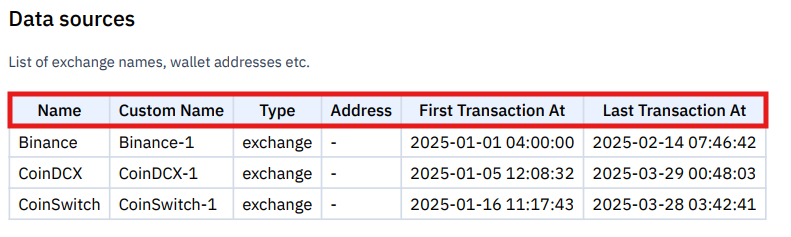
Data Sources
Frequently Asked Questions
Which KoinX reports do I need as a Canada-based user?
Which KoinX reports do I need as a Canada-based user?
The Complete Tax Report (Canada) is your main document. It provides the full summary of your crypto activity.
Is crypto mining income treated differently from trading gains in Canada?
Is crypto mining income treated differently from trading gains in Canada?
Yes. Hobby mining may lead to capital gains on disposal, while business-scale mining is treated as business income when received.
Does KoinX's Canada report comply with CRA guidelines?
Does KoinX's Canada report comply with CRA guidelines?
Yes. The report uses the Adjusted Cost Base method and treats crypto-to-crypto trades as dispositions according to CRA guidance.
How are crypto-to-crypto trades taxed in Canada?
How are crypto-to-crypto trades taxed in Canada?
Each trade is considered a disposition, and the fair market value of the crypto received determines the proceeds.
What is the difference between capital gains and business income treatment?
What is the difference between capital gains and business income treatment?
Capital gains are taxed with a 50% inclusion rate, while business income is 100% taxable.